

Severance Pay in Nova Scotia
If you have recently lost your job, one of the first questions you are likely asking is: “Am I entitled to severance pay in Nova Scotia?”
The answer is often yes—but not always in the way you might expect.
Understanding how severance pay in Nova Scotia works can make a significant difference in how much compensation you receive. Many employees accept far less than they are entitled to simply because they do not understand their rights.
Here are five key things you need to know.
1. Severance Pay in Nova Scotia Is Not Just About the Labour Standards Code
Many employees believe their severance is limited to the minimum amounts set out in the Labour Standards Code. However, this is only part of the picture.
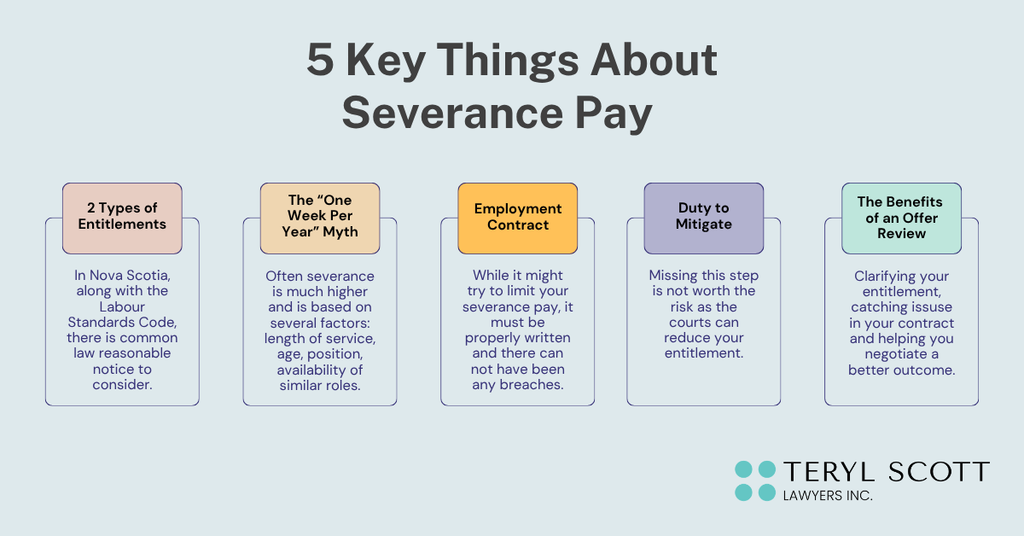
In Nova Scotia, there are two types of severance entitlements:
- Statutory minimums under the Labour Standards Code
- Common law reasonable notice, which is often much higher
Employers can terminate employment without cause—but only if they provide adequate notice or pay in lieu. Most employees are entitled to significantly more than the minimum standards, unless their original employment contracts says otherwise.
2. “One Week Per Year” Is Usually Wrong
A common myth is that severance equals one week per year of service.
In reality, under common law, severance is often much higher and is based on several factors, including:
- Length of service
- Age
- Type of position
- Availability of similar employment
In many situations, reasonable severance can be closer to one month per year of service or more, depending on the circumstances.
This is why getting advice before accepting an offer is so important.
3. Your Employment Contract May Limit Your Severance—But Not Always
Many employers include termination clauses in employment contracts that attempt to limit severance pay in Nova Scotia.
However, these clauses can be poorly drafted or unenforceable.
If a termination clause is invalid:
- It may be completely ignored by the court
- You may be entitled to full common law severance instead
This can mean the difference between receiving a few weeks of pay versus several months—or more. The contract can also be voided if there is a breach of your human rights, such as a failure to accommodate a disability or sexual harassment.
4. You Have a Duty to Mitigate Your Losses
After termination, employees are required to take reasonable steps to find new employment. This is known as the duty to mitigate.
If you find a new job during your notice period:
- Your new income may reduce the severance owed to you
If you do not make reasonable efforts to find work:
- A court may reduce your entitlement
For example, courts expect employees to actively search for comparable work and document their efforts.
This is a critical but often overlooked part of severance pay in Nova Scotia.
5. A Review Of a Severance Offer Can Be Well Worth It
Employers often provide severance offers quickly after termination—and may pressure employees to accept them.
However, these offers are:
- Frequently lower than what you are legally entitled to
- Often tied to signing a release, meaning you give up your rights to claim more or file a complaint with the Labour Standards Code or the Human Rights Commission.
Once accepted, you usually cannot go back and ask for additional compensation.
Even a brief review with an employment lawyer can:
- Clarify your true entitlement
- Identify issues in your contract
- Help you negotiate a better outcome

Teryl Scott Lawyers – Your Severance Strategy Advantage
At Teryl Scott Lawyers, we understand that job loss is both financially and emotionally stressful. That is why we focus on practical, cost-effective solutions for employees navigating severance pay in Nova Scotia.
Our approach is different:
- We offer legal coaching, allowing you to stay in control of your matter
- We provide quick turnaround advice
- We help you understand whether your severance offer is fair—and what to do next
Whether you are reviewing a severance package, negotiating with your employer, or simply trying to understand your rights, having the right strategy can make a significant difference.
Severance pay in Nova Scotia is more complex—and often more valuable—than many employees realize.
Between common law entitlements, contract terms, and mitigation obligations, there are many factors that affect what you are owed. The biggest mistake employees make is assuming the first offer is fair.
The above is provided for informational purposes only and does not constitute legal advice — contact a lawyer to discuss your personal circumstances and learn your options.
Teryl Scott Lawyers Inc. Related Services
To learn more about the legal services we offer in Halifax and surrounding areas visit the following pages:
Employment Law Overview, Wrongful Dismissal and Employment Contracts
Share with these links:
Follow us at these links: